

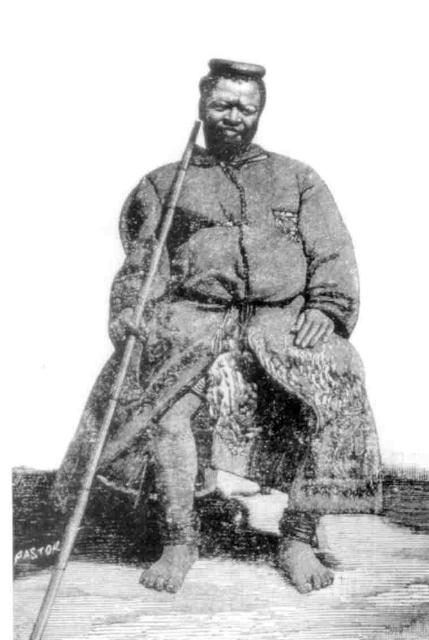
Zwangendaba was the son of the Jere chief, Hlatshwayo. According to Phathisa Nyathi (2015), Zwangendaba was a short man whose poet described him as, "Umfitshane onganyathel' ingubo, Ingani ezabade bayazinyathela." Chief Zwangendaba married two of King Zwide's sisters, namely Lompethu and her younger sister Soseya who was later to become King Mphezeni's mother. The two Nxumalo sisters lived at Emveyeyeni. This is the Mphezeni, then living at Chipata within the district of Lundazi in Zambia, who apparently hosted King Lobengula of the Ndebele after he disappeared from his kingdom from 1894 till his death in 1922.
Migrations
Around the 1820s , the Jere Chieftancy was involved in raiding associated with the slave trade at Delagoa Bay and at Inhambane. Zwangndaba led a group of raiders and by 1822 was raiding for slaves on his own account. This led to subsequent migrations north through Mozambique
Conflicts with rival raiding groups i.e. Nxaba induced the group to migrate north of the Limpopo river into present day Zimbabwe.
Here they attacked the Rozvi people who inhabited the plateau between Limpopo and Zambezi river. By this time Zwangenda had absorbed the Tonga, Kalanga as well as the Rozvi.
From Zimbabwe, Zwangendaba led them across the Zambezi near the confluence with the Luangwa river in December of 1835.He went further north to the west of Lake Nyasa. The passed through Chewa and Tambuka territory before establishing a settlement on the Ufika plateau in the 1940s.
It is said that in each instance they were forced to move northward by the Mfefcane but there is no evidence of it.
Farming
The Jere Ngoni people were not in a state of constant migration. They were occasional cultivators and cattle herders
Death
Zwangendaba died in 1848 near present day Tanzania. After his death, his Ngoni state fragmented into several components, and the people continued their travels, occupying areas in present-day Tanzania, Malawi, and Zambia.